

How To Fix Rice Noodles Without Making Them A Sticky Lump

A complete guide to making Cheung Fun, a archetype dim sum dish, from scratch. It includes a concoction formula, filling options, steaming tips and a dipping sauce.
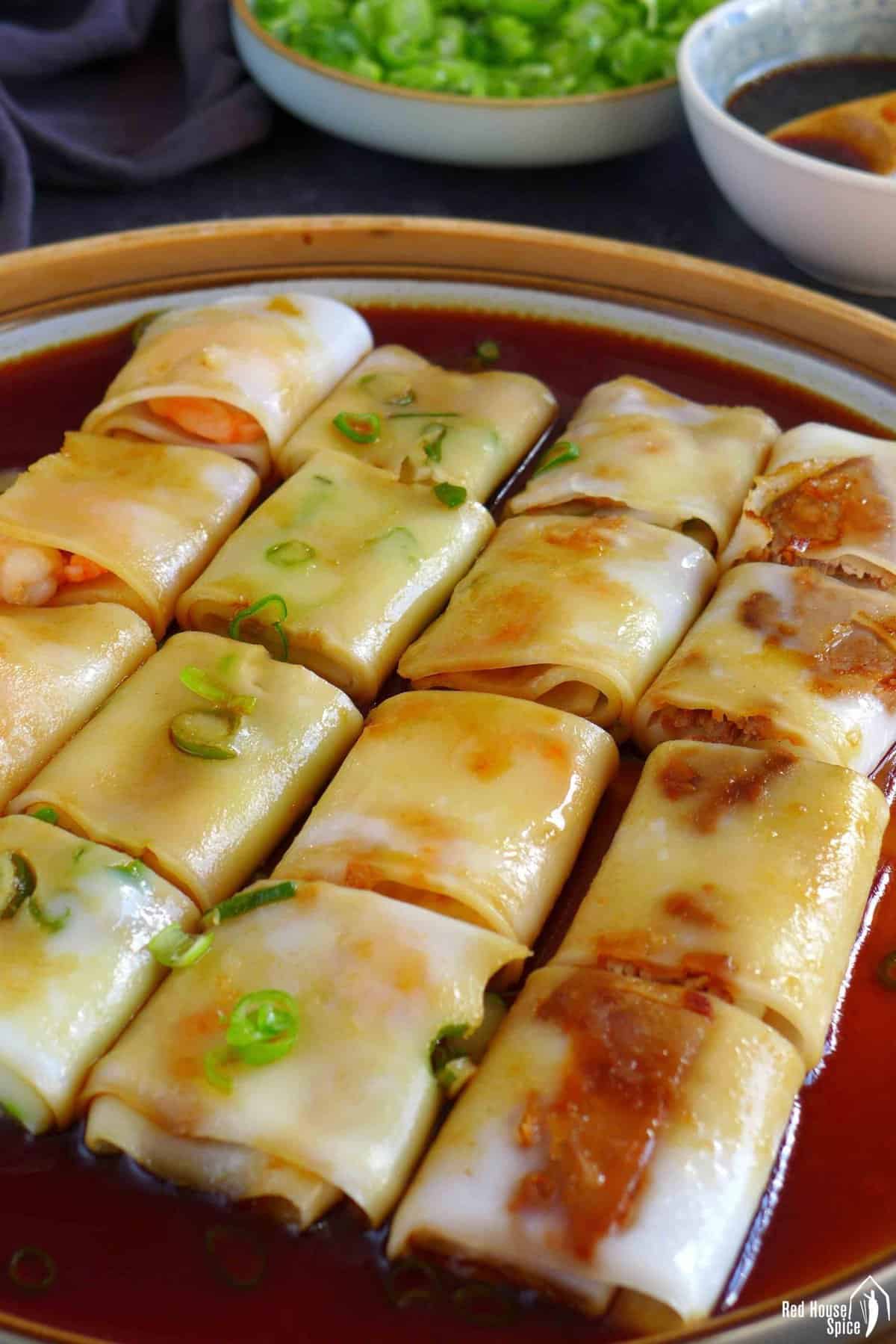
What is Cheung fun
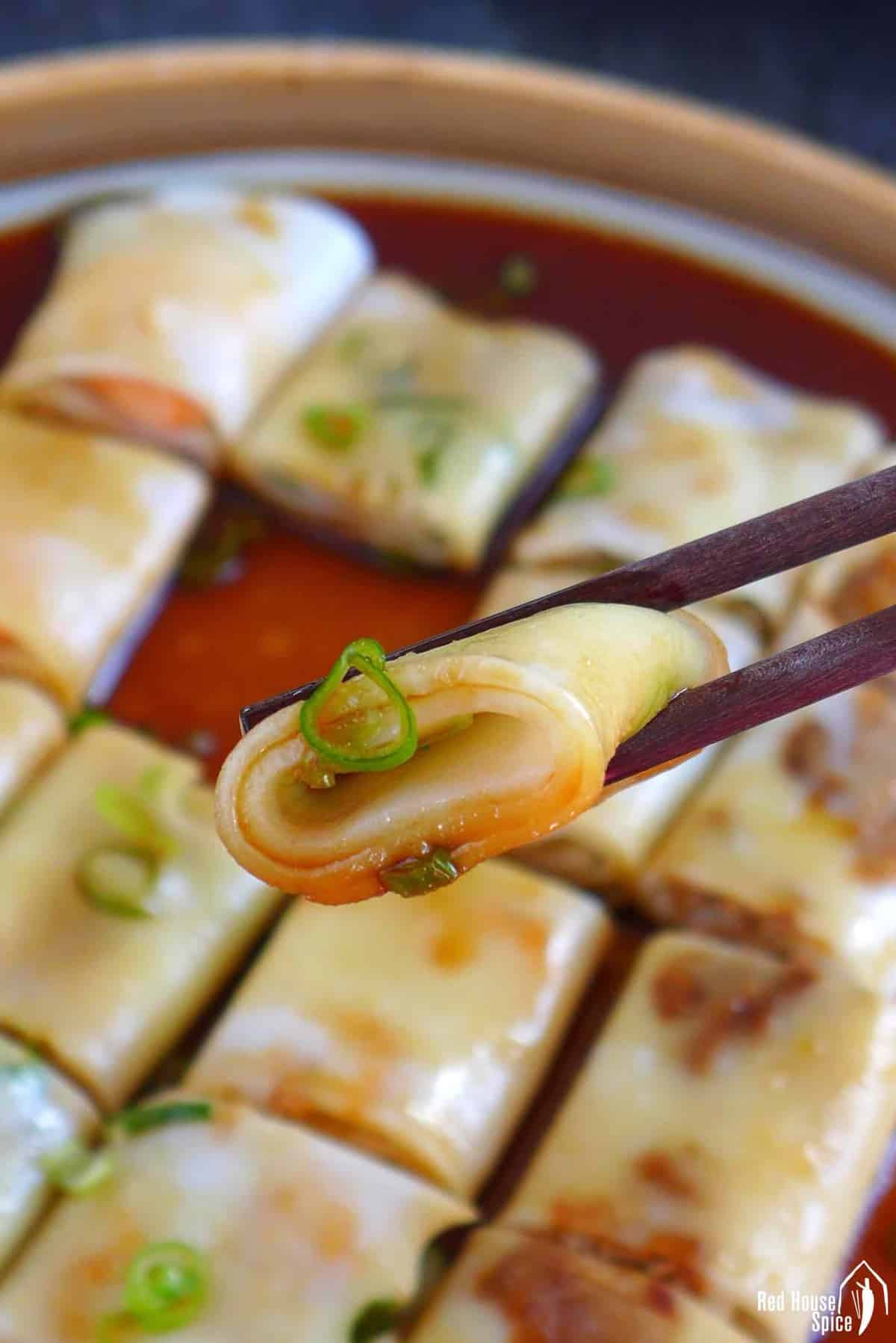
If you're familiar with Cantonese dim sum meals (广式早茶), you probably take tasted Cheung Fun (肠粉), a classic dish also known every bit steamed rice noodle rolls (or rice rolls). Apart from dim sum restaurants, small street cafes in County and Hong Kong serve it, often with congee, every bit a quick nonetheless delicious breakfast or snack.
Essentially, Cheung Fun refers to sheets of rice noodles presented equally rolls stuffed with various fillings. Smooth, slippery, soft and a piffling chewy, they're typically served with a savoury sweet sauce.
Similar many classic dim sum items, such as Har Gow, Char Siu Bao, Shumai, etc, Cheung Fun is a steamed dish. The equipment used and steaming method are very similar to how you cook Northern Chinese street nutrient Liang Pi (Cold Skin Noodles), a love childhood food of mine.
One of the many great things about Cheung Fun is that it tin be made to suit different dietary requirements: vegetarian, vegan, gluten-free, etc.
What to use for the batter
The offset step when making Cheung fun is to mix the concoction which consists of rice flour, starch and water.
A combination of rice flour and starch
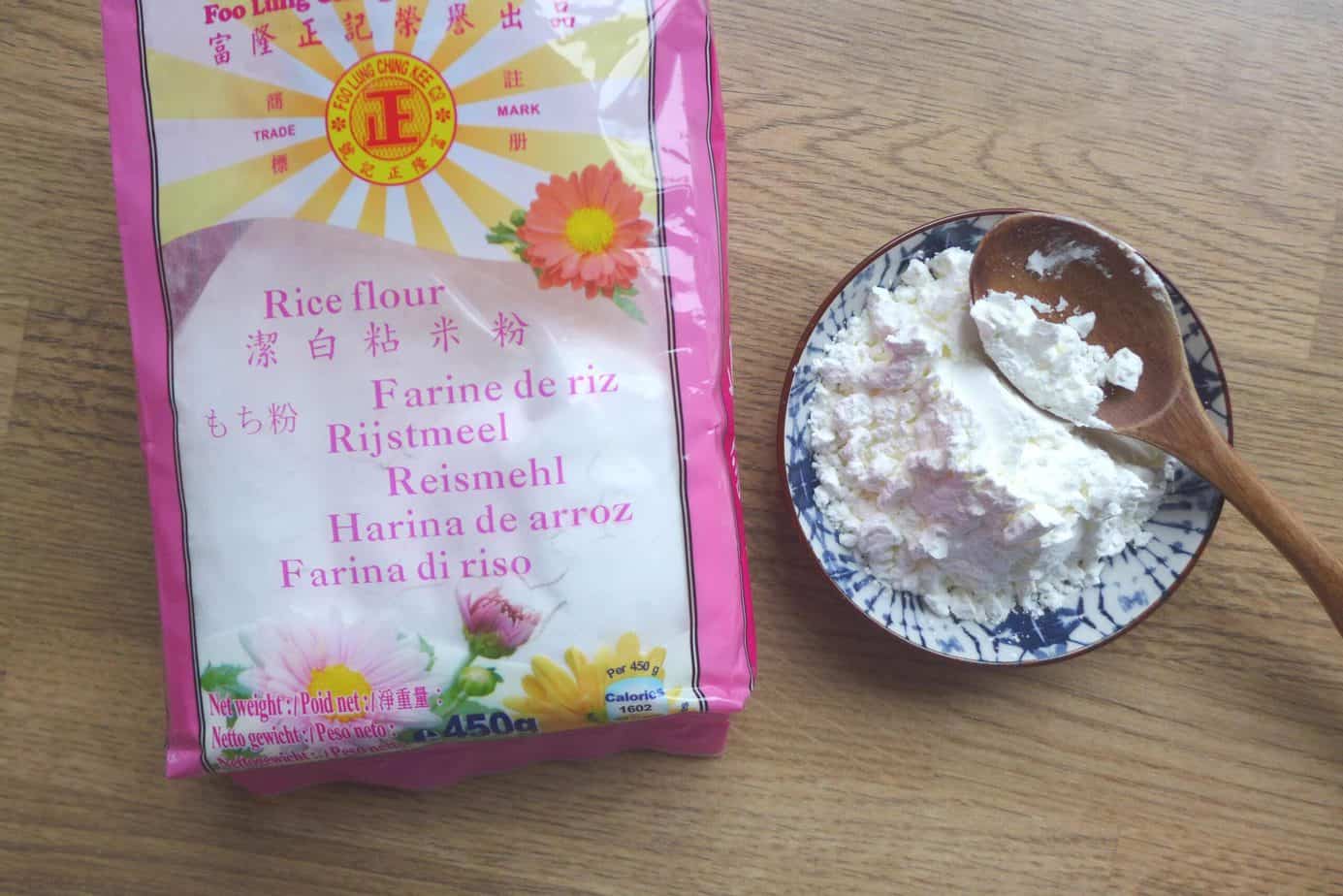
Rice flour (粘米粉), the key ingredient of Cheung Fun, is finely milled rice that looks like cornstarch. It contributes to many archetype Chinese dishes, such as New Year Rice Cake, Turnip Cake, etc. Don't misfile information technology with viscid rice flour (糯米粉) which has a sticky nature and can not exist used as a substitute for this recipe.
To improve the texture of Cheung Fun, starch is often combined with rice flour to make the batter. It can be wheat starch (澄粉), cornstarch, tapioca starch, etc. I've experimented with all of them and found out that the outcome isn't dramatically different.
If available, I'd recommend wheat starch as information technology seems to produce a fiddling more than transparent and elastic texture. Nevertheless, please experience free to employ corn or tapioca starch if they're at mitt.
Note: In some Chinese stores, you may discover pre-mixed, special Cheung fun flour (肠粉专用粉).
The ideal ratio by weight
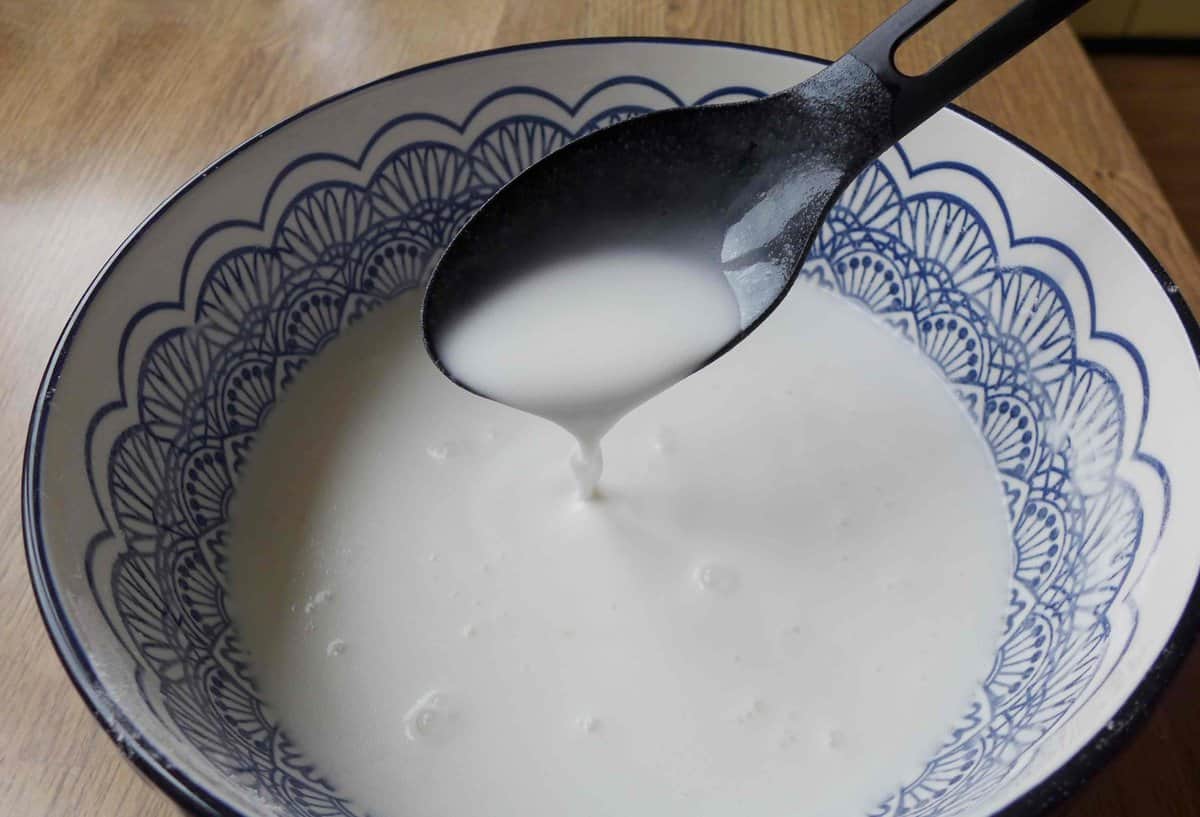
Through multiple testing, I've finally settled on a concoction ratio that works very well in producing soft, shine Cheung Fun with a fiddling chewiness. The ratio is by WEIGHT. No matter how you measure, using grams or ounces, the proportion remains the same.
- ane part starch
- 2 parts rice flour
- 7 parts water
For example, to make 6 rolls of Cheung Fun, whisk 50g starch, 100g rice flour, 350g water, along with a little salt and cooking oil, in a mixing basin until a runny, lump-free batter forms.
Subsequently the concoction is mixed, leave it to rest for a short time to allow the starch molecules to fully blot the liquid. It also helps to remove any bubbles trapped in the batter. While waiting, move on to the side by side stride to prepare some fillings.
Cheung Fun filling options
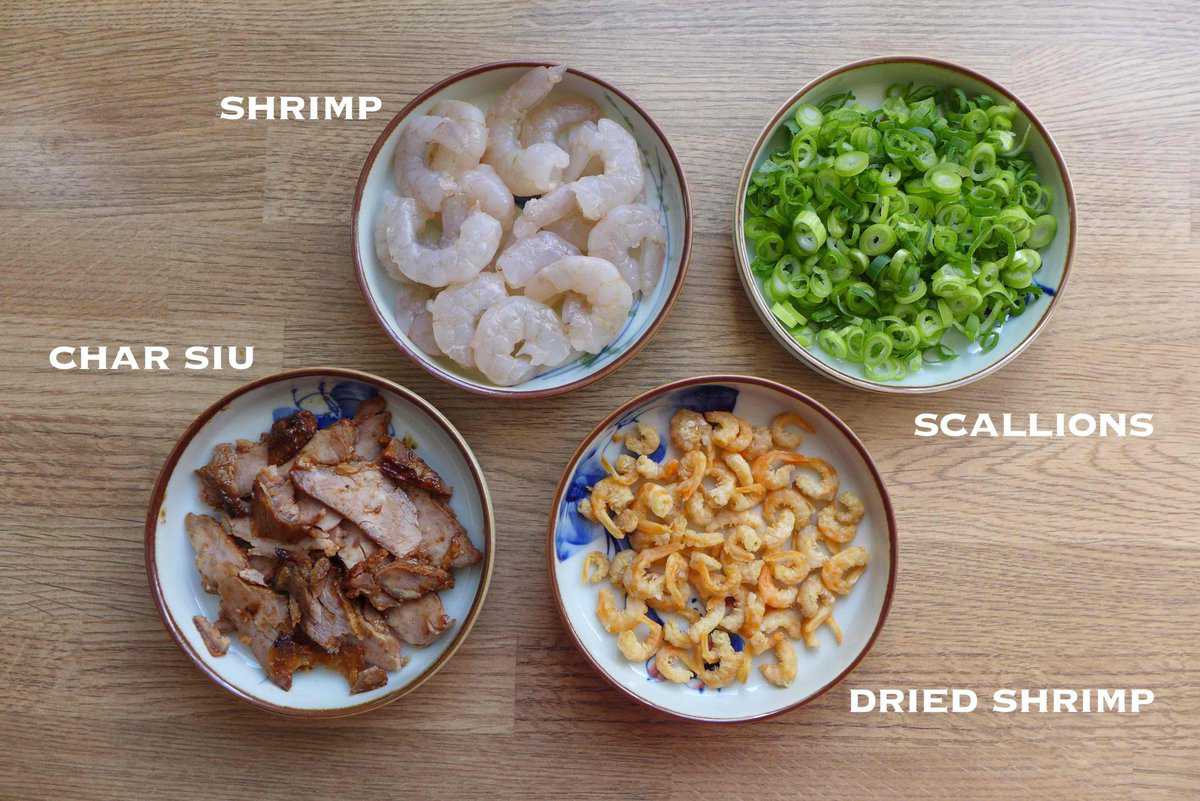
Dim sum restaurants normally offer a variety of Cheung Fun dishes with different fillings. For shooting this recipe, I've called four ingredients for demonstration: scallions, dried shrimp (rehydrated), Char Siu pork and shrimp. All of them tin can be directly added to the batter when steaming.
Other popular fillings include marinated pork or beef, eggs, Chinese fried doughnut sticks (Y'all Tiao), etc.
How to steam
Once the concoction is rested and the fillings are chopped, y'all're set up to steam them. The process is simple but let'southward first talk about the equipment needed.
Equipment
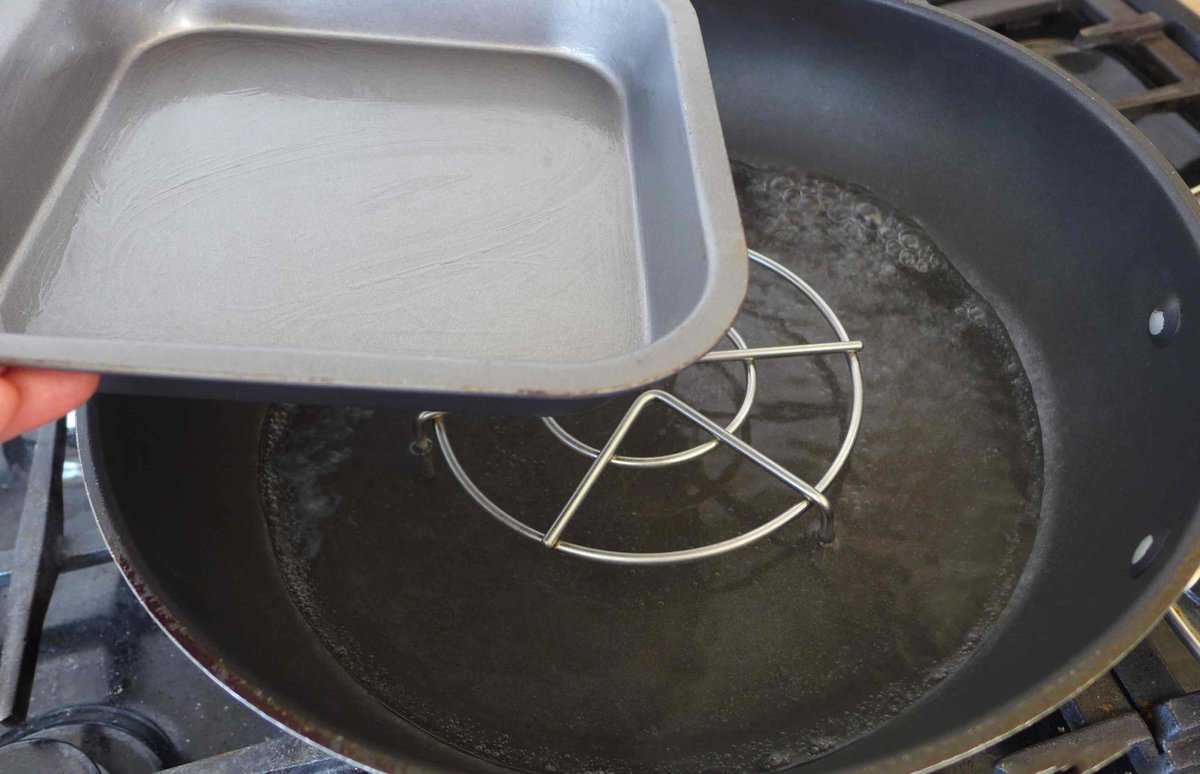
- Baking trays/canvass pans. Use 2, if available, to speed upwards the steaming process. They should be modest enough to fit into your steamer. Light-weighted ones transfer heat quickly thus prefered.
- A steamer. Yous can either utilize a steamer handbasket or a steamer rack to pop up the tray. I utilize the latter sitting in a big wok.
- A scraper or a spatula with a straight line edge. It's for peeling the steamed sheet off the tray and turning information technology into a roll.
NOTE: I've seen special Cheung fun makers available online. They look handy for those who wish to frequently brand Cheung Fun at home.
Steaming tips
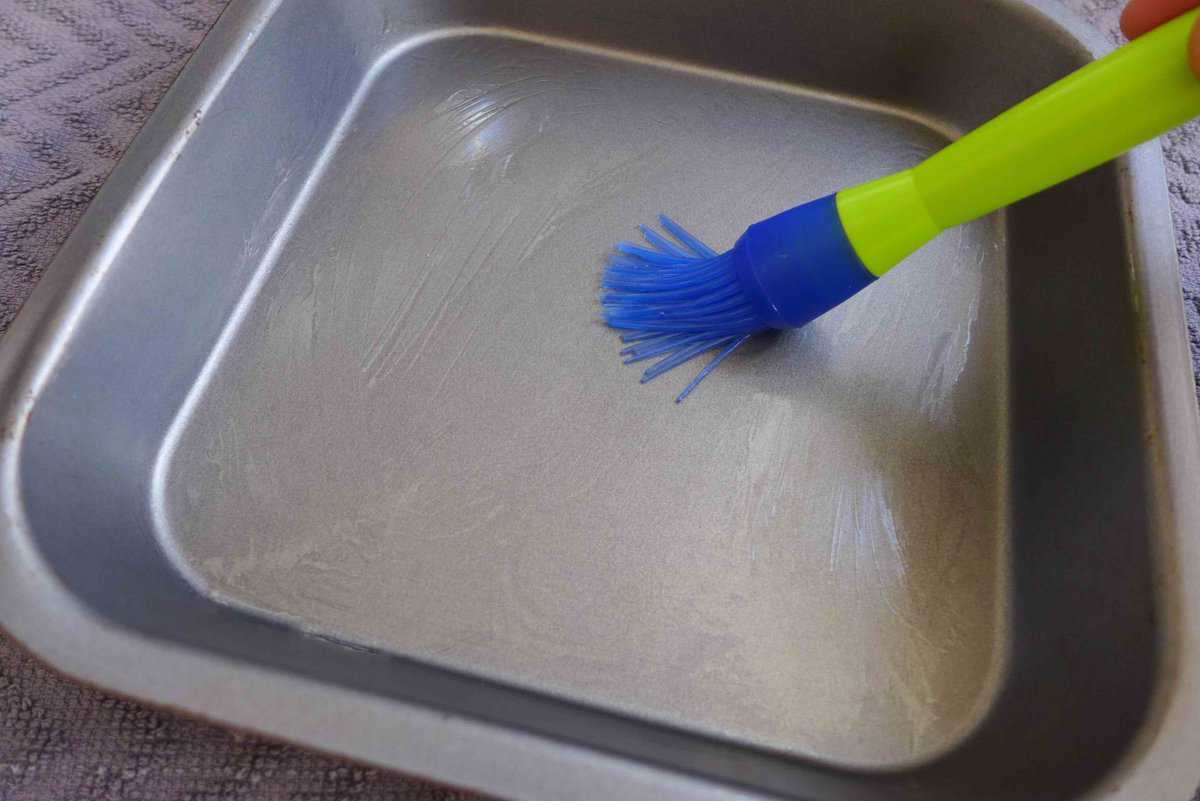
Retrieve to brush or spray the tray with a very thin layer of oil earlier you pour in the flour mixture (practice so fifty-fifty if you're using non-stick ones).
Ever stir the concoction very well before pouring as starch tends to sink to the bottom. Add the concoction only enough to cover the entire surface of the tray. If too much, the cooked rolls will exist too thick.
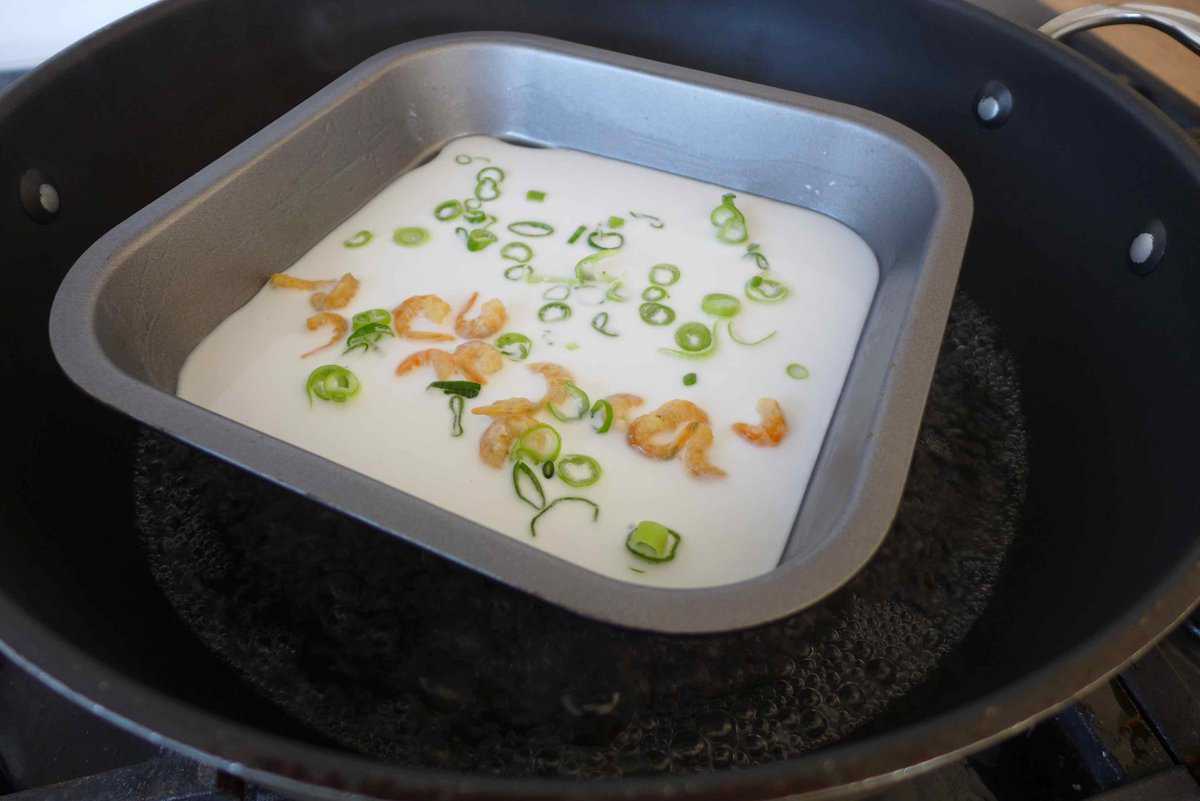
Put the fillings over the batter if using scallions, dried shrimp (rehydrated) or Char Siu. If adding raw ingredients, such as shrimp, I recommend you steam the batter for 1 minute (it has turned somehow solid), then add the fillings. Otherwise, the wet coming from the raw ingredients would dilute the batter where they sit.
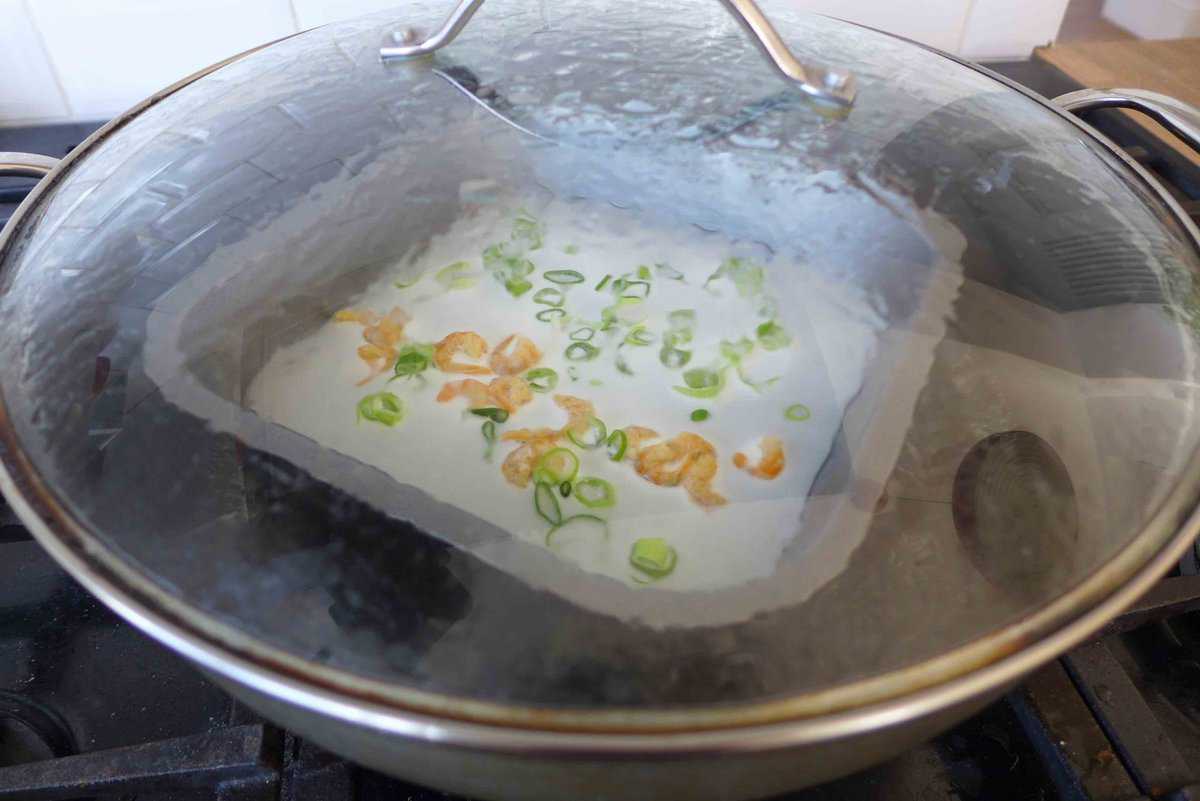
Don't put the tray in until the h2o starts humid. Encompass with a chapeau and get out to melt for iii minutes (do not open the hat during the process).
Use two trays to rotate: Take the start tray out of the steamer and so put in the 2nd one straight away. After the outset rice sheet is cooled and peeled off the tray, the 2d one should be cooked.
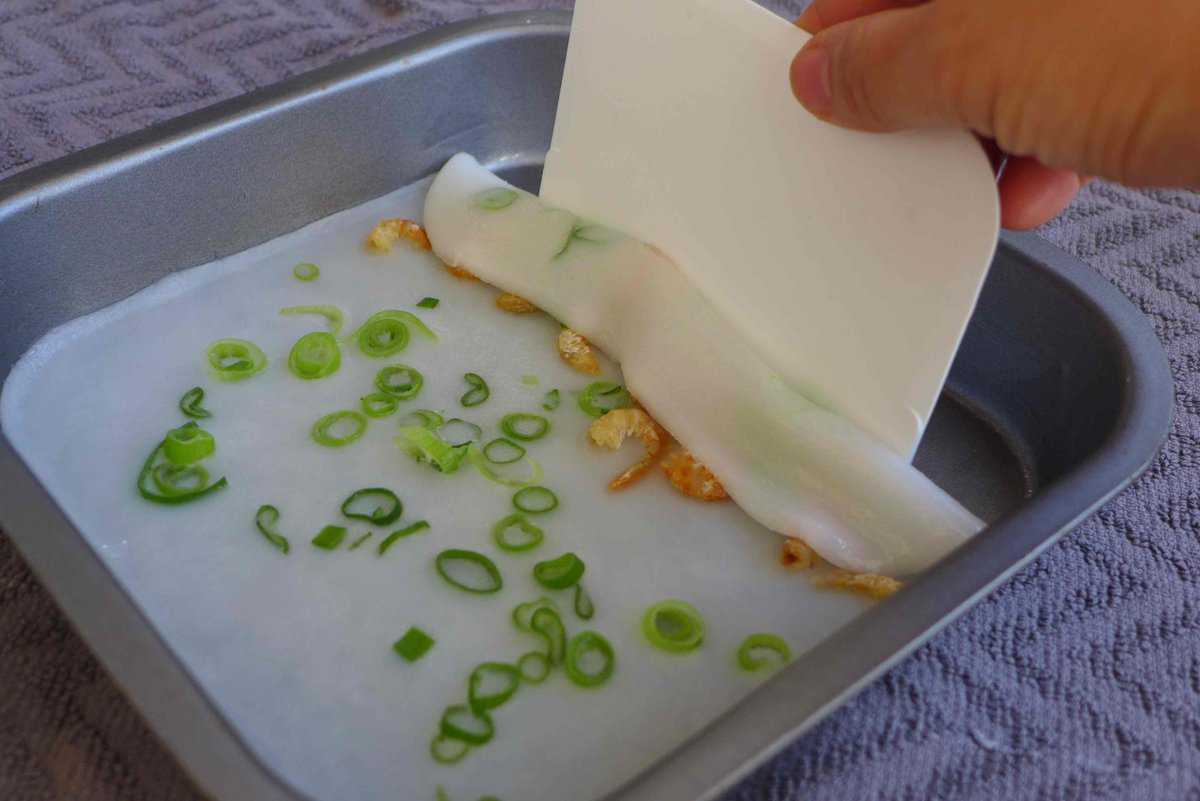
Let the rice canvas cool for a infinitesimal earlier you scrap and roll it. Otherwise, you might find it too sticky.
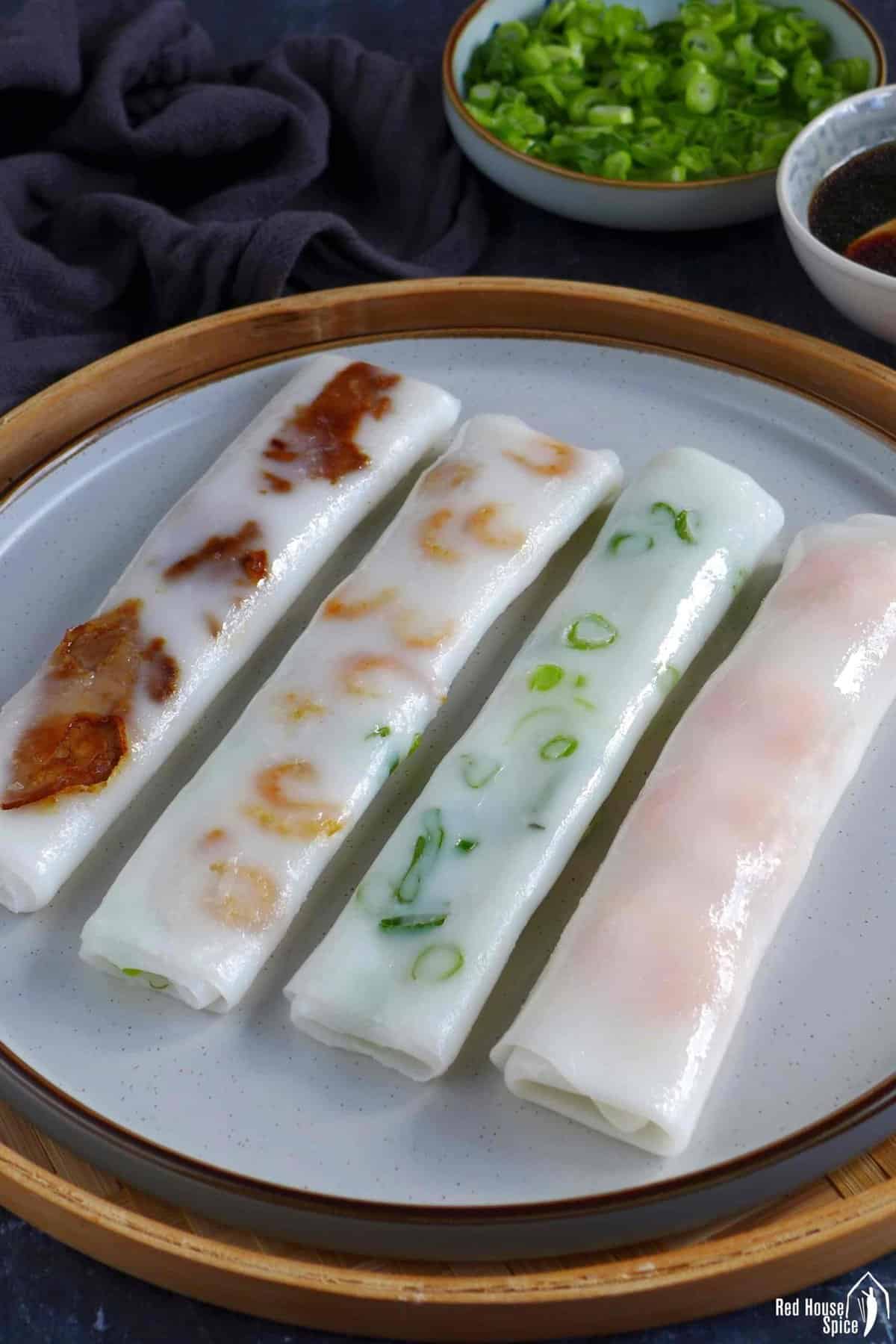
Serve with a Cheung Fun sauce
An authentic Cheung Fun dish isn't complete without a delicious sauce. So don't forget to prepare it before you beginning steaming the rolls.
The archetype sauce
Information technology's a soy sauce based liquid that has a deep bister colour and a rich umami gustatory modality. Using a few common Chinese condiments and aromatic vegetables, yous can produce it in just a few minutes. To brand nigh 150ml (⅔ loving cup) of sauce, you need:
- Onion (or shallots), ½
- Garlic, 4 cloves
- Dried shiitake mushrooms (rehydrated), 2 pieces
- Neutral cooking oil, ½ tablespoon
- Water, 120ml (½ loving cup)
- Light soy sauce, 4 tablespoons
- Dark soy sauce, 1 teaspoon
- Oyster sauce (or vegetarian stir-fry sauce), ane tablespoon
- Sugar, 2 tablespoons
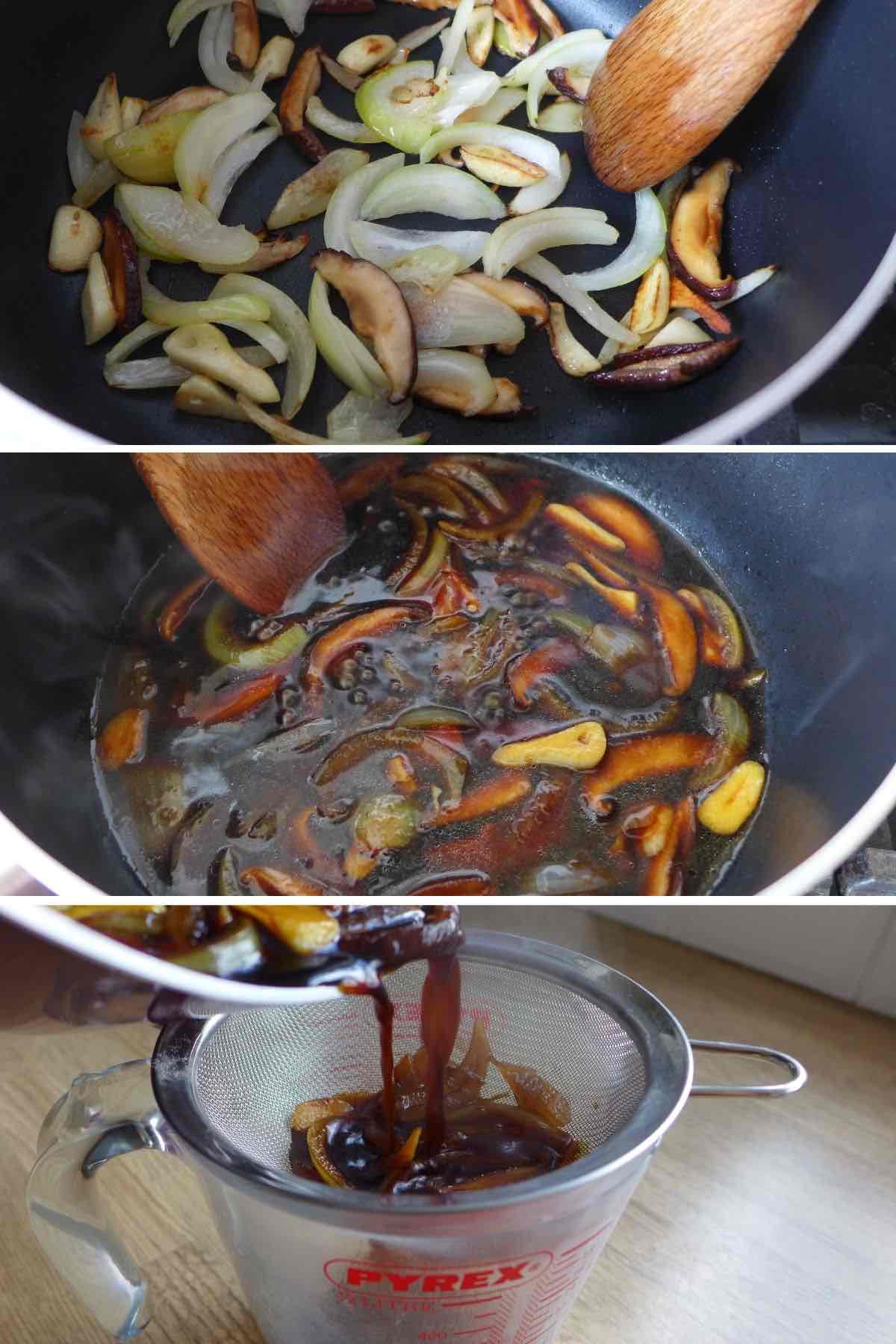
- Firstly cut onion, garlic and mushrooms into thin slices. And so fry them in oil until the onion is wilted and turns slightly brown.
- Pour in water and then go out to simmer, with a lid on, for nearly three minutes to fully release their aroma.
- Add light and nighttime soy sauce, oyster sauce and sugar then bring back to a eddy.
- Finally, strain the sauce through a sieve to remove all the solid bits (you can use them in stir-fries or soups). Pour it over the freshly steamed Cheung Fun. Garnish with toasted sesame seeds if you wish.
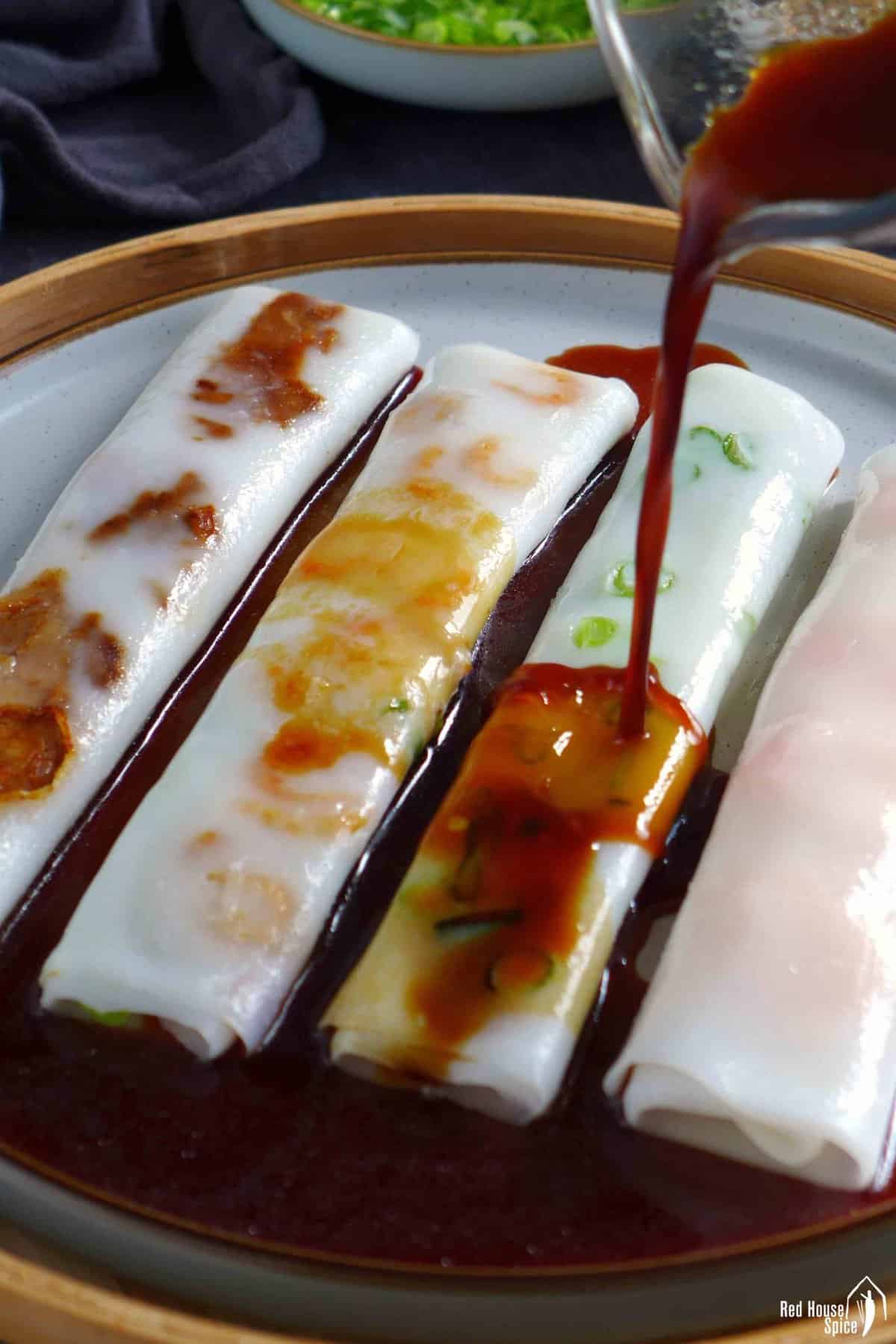
NOTE: This bootleg sauce can be used for other dishes as well, due east.g. equally a dipping sauce for dumplings, leap rolls, turnip cake, etc, or every bit seasoning for fried rice, fried noodles, etc.
Substitute ideas
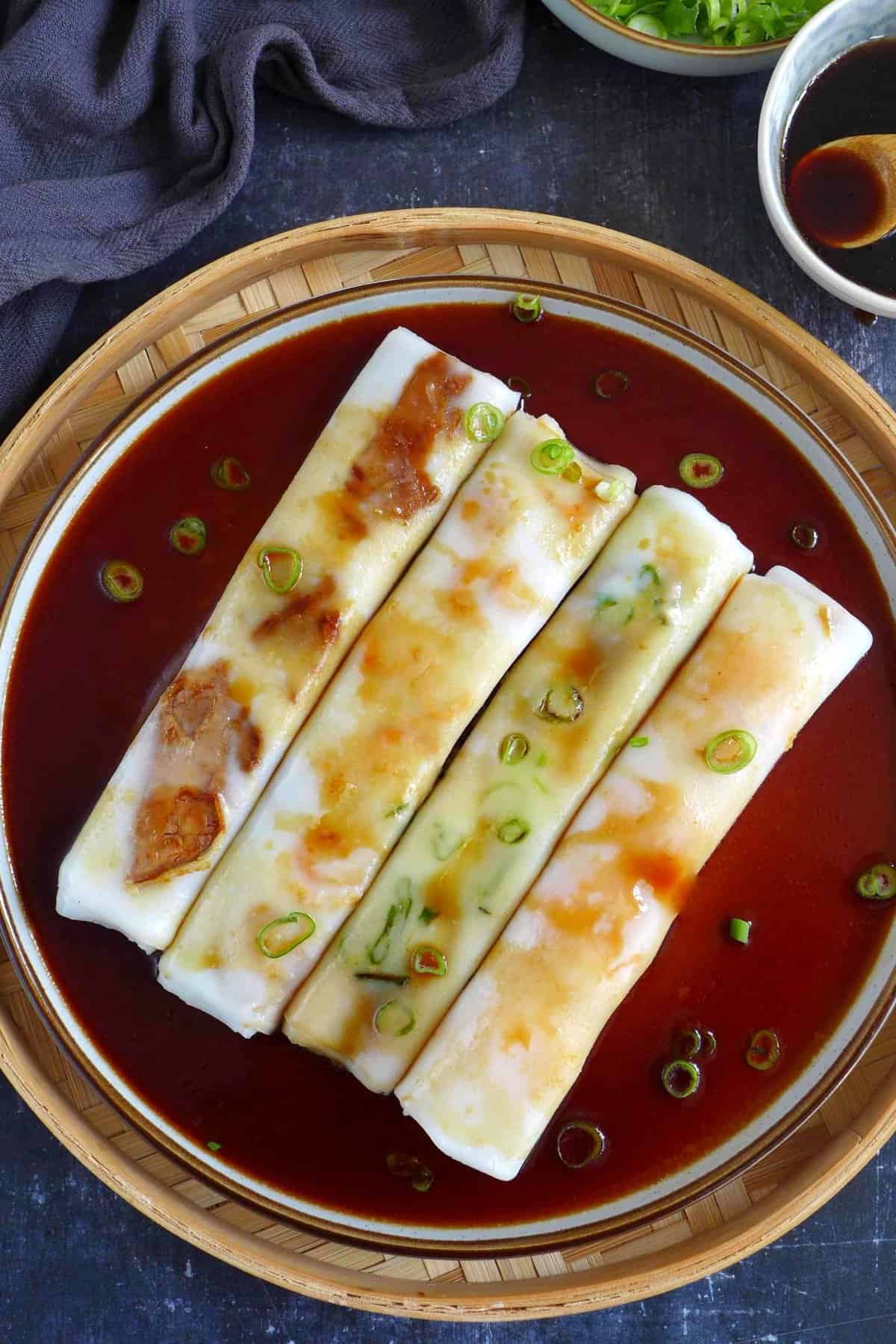
If you don't bother making the sauce, use shop-bought Cantonese fashion sweet soy sauce (甜酱油) to substitute. It's a type of flavoured soy sauce with a thicker consistency than regular soy sauce.
Another culling seasoning is a combination of sugariness soy sauce and Chinese chilli oil (that's what I similar my Egg Foo Young seasoned with). It's non a traditional formula only information technology tastes magical!
Storage and reheat
Want to brand a big batch and serve later? You may keep cooked Cheung Fun in the fridge for up to three days. Call up to put it in airtight bags/containers to avoid drying out. Steam it for three minutes to reheat.
Alternatively, freeze the leftover Cheung fun for upwardly to 1 month. Do not defrost equally they'd turn breakable. Steam for half dozen minutes from frozen. They'll get soft and pliable over again.
This recipe makes half dozen rolls using a 18cm×18cm/7"×7" baking tray/sheet pan. If making a bigger batch, merely increase the ingredient quantity proportionally.
For the sauce
- ½ tablespoon neutral cooking oil
- ½ onion, sliced
- iv cloves garlic, sliced
- two pieces dried shiitake mushrooms, rehydrated and sliced
- 120 ml h2o - about ½ cup
- 4 tablespoon lite soy sauce
- 1 teaspoon night soy sauce
- 1 tablespoon oyster sauce
- 2 tablespoon sugar
For the batter
- 100 g rice flour - nearly 3½ oz
- 50 g wheat starch, or cornstarch/tapioca starch - about 1¾ oz
- ¼ teaspoon common salt
- 1 teaspoon neutral cooking oil - plus a niggling for brushing
- 350 one thousand water, room temperature - 1½ cup
Filling options
- Scallions - finely chopped
- Dried shrimp - rehydrated
- Char Siu pork - sliced
- Shrimp - shelled
Make the sauce (come across note 1 & two)
-
Add oil to a pocket-sized saucepan over medium rut. Fry onion, garlic and mushrooms until the onion browns on the edge.
-
Pour in water and bring to a boil. Cover with a lid and leave to simmer over low rut for three minutes.
-
Uncover then add light soy sauce, night soy sauce, oyster sauce and sugar. Once it comes dorsum to a boil, remove from the estrus.
-
Pass the sauce through a sieve to remove all the solid bits. Set aside.
Mix the batter
-
Put rice flour, wheat starch (or cornstarch/tapioca starch), salt and oil into a mixing bowl. Add ⅓ of the water and stir until smooth. Pour in the rest of the water and mix well.
Steam the rolls
-
Castor a thin layer of oil over a small-scale, lite blistering tray (sheet pan) that fits in the steaming apparatus you program to employ (encounter note 3).
-
In a wok/pot which you apply for steaming, bring water to a boil. Identify the tray over the steamer rack (or inside the steamer basket). Pour in concoction but enough to thinly cover the surface of the tray. (I use near 60ml/¼ cup of batter for a 18cm×18cm/7"×7" tray).
-
Add the filling of your option (see note 4 if using shrimp). Cover with a hat then leave to steam over medium estrus for three minutes. You should see bubbles appear at that moment.
-
Uncover and carefully take out the tray. Leave to cool for about 1 minute.
-
Use a scraper (or a spatula) to gently lift the sheet from one end and coil it towards the other end. Echo to steam the balance of the batter (Tip: to speed upwardly the procedure, use 2 trays to rotate).
Serve and store
-
Transfer the steamed rolls to a serving plate. Use the scraper to cut them into seize with teeth-sized pieces. Pour the sauce over (or have it on the side for dipping).
-
You may store the leftovers (in an closed handbag/container) in the fridge for up to 3 days. Steam for iii minutes to reheat. Alternatively, freeze for upwardly to one month. Steam for half dozen minutes without defrosting.
1. This recipe makes well-nigh 150ml (⅔ cup) of sauce. It may exist more than you need for 6 rolls. You can store it in the fridge for up to a calendar month. You may use information technology every bit a dipping sauce for dumplings, spring rolls, turnip cake, etc, or equally seasoning for fried rice, fried noodles, etc.
2. Alternatively, use Cantonese sweet soy sauce and/or chilli oil as dipping sauce.
3. Low-cal-weighted, not-stick, foursquare (or rectangle) blistering trays/sheet pans are preferable. This recipe too works for special Cheung Fun makers.
4. If using raw shrimp every bit the filling, you need to steam the batter for 1 minute then identify the shrimp over and cook for another ii minutes.
Serving: one plain curlicue | Calories: 97 kcal
Show me your dish or ask me questions @red.business firm.spice
NUTRITION DISCLOSURE: Nutritional data on this website is provided as a courtesy to readers. It should be considered estimates. Please use your own brand nutritional values or your preferred nutrition calculator to double cheque against our estimates.
More than Dim Sum
-
Chinese Bound Rolls (春卷), Deep-Fried or Air-Fried
-
Steamed Custard Buns (Nai Wong Bao, 奶黄包)
-
Shrimp Toast (蝦多士), Pan-fried or Air-fried
-
Chinese Breakfast: fifteen Classic Recipes
Reader Interactions

How To Fix Rice Noodles Without Making Them A Sticky Lump,
Source: https://redhousespice.com/cheung-fun/
Posted by: lunaupellift.blogspot.com
0 Response to "How To Fix Rice Noodles Without Making Them A Sticky Lump"
Post a Comment